How to Tell if a Vintage Measuring Tool Is Still Accurate
Practical checks for calipers, dial gauges and squares so you can decide whether a vintage measuring tool is fit for precision work and what to look for when buying a Starrett‑type tool.

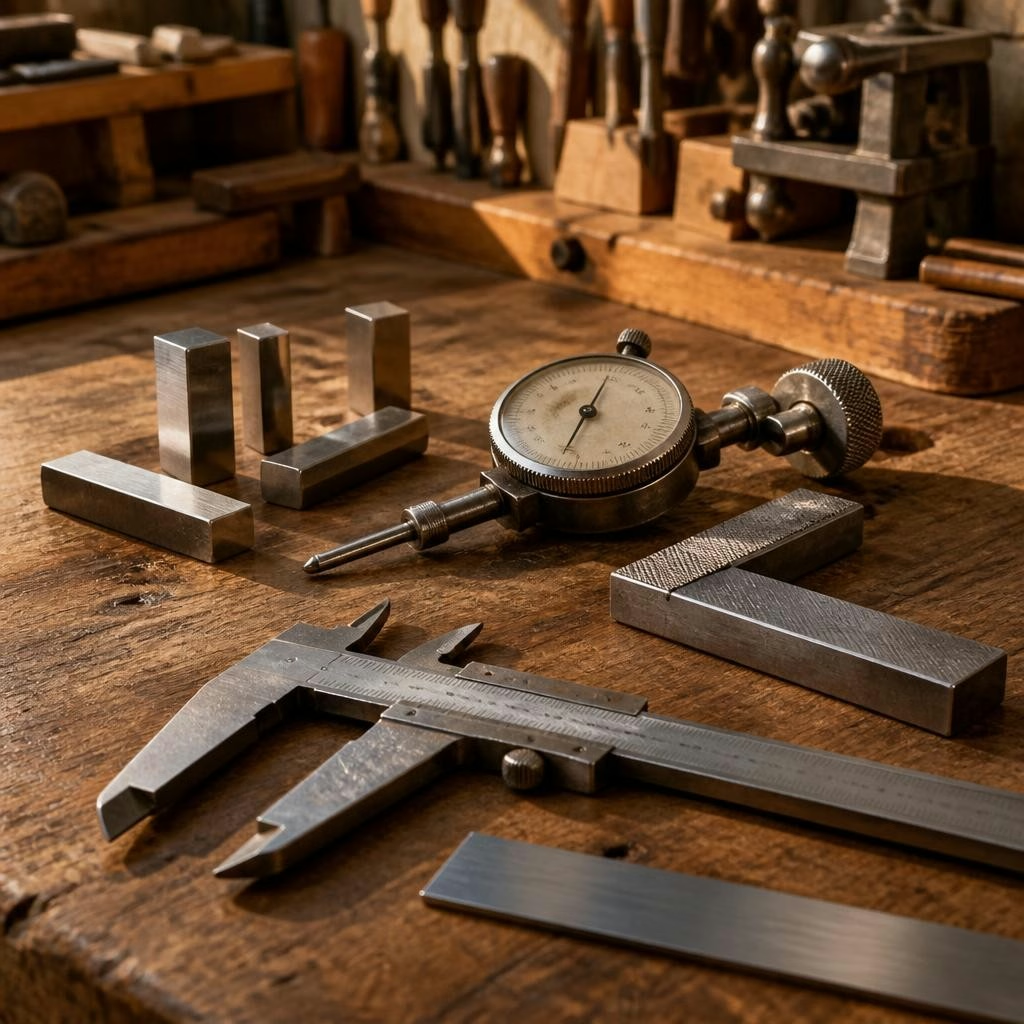
Why accuracy still matters with vintage tools
Vintage measuring tools can be beautiful, durable and cost‑effective — but accuracy is what separates a display piece from a shop‑ready instrument. Woodworkers, engineers and hobbyists rely on measuring tools for repeatable results; a seemingly small error in a caliper or dial gauge can compound across a project. Before you commit to using an old tool for precision work, run a few simple checks to confirm it reads consistently across its range.
Begin with a careful visual and mechanical inspection
Start by checking for obvious problems: gouges, nicks or rust on measuring faces and jaws; bent or loose sliding members; worn teeth or damaged rack-and-pinion on dial drives; and missing set screws or retaining pins. Operate the tool slowly to feel for rough spots, sticking, or excessive play. For calipers and micrometers, the jaws and spindles should close cleanly with no visible gap. For dial indicators, spin the bezel and move the spindle to see if the needle returns smoothly.
Zeroing and basic tests for calipers
With vernier, dial or digital calipers, bring the jaws fully closed and set the zero. If the caliper won’t zero or the zero shifts when you open and close it, that’s a sign of wear or internal slop. Slide the jaws along the full travel and check for consistent feel and no sudden jumps. To test accuracy, measure a set of known references (gauge blocks, a calibrated micrometer, or a hardened steel rule). Compare readings at several points (near 0, mid‑range, and max range). Any systematic error or large variation suggests it needs servicing or is better suited for non‑critical work.
How to check dial indicators and dial gauges
Mount the indicator on a stable stand and use a flat reference (surface plate, thick steel plate) and a known height step or micrometer as your standard. Move the spindle through its travel slowly and note whether the needle moves smoothly and returns to the same reading when repeated. Check repeatability by taking multiple readings at the same position and watching for hysteresis (different readings on approach vs. withdrawal). Listen and feel for any gear lash or dead spots; excessive wobble or erratic motion means the gauge may not be reliable for fine work.
Verifying squares and straightedges
A simple flip test helps check a square: rest the blade against a true straight edge or surface, mark a line, flip the square 180° and draw another line from the same starting point. If the two lines diverge, the square is out of true. For machinist squares, use a surface plate and feeler gauges or a known straightedge to check for gaps. Small, consistent errors may be adjustable; large errors or warped blades usually limit the tool to rough layout rather than precision judging.
Deciding when a vintage tool is still suitable for precision work
A vintage tool is fine for precision work when it passes zero checks, shows repeatable readings across its range, and has minimal mechanical play. Light surface rust, cosmetic wear and historic dings don’t automatically disqualify a tool, but deep pitting on measurement faces, bent jaws, compromised threads, or inconsistent dial motion do. Some issues can be corrected by a competent service (lapping jaws, replacing worn screws, cleaning and lubricating the mechanism); other flaws mean the tool is best used for layout or as a collectible.
Why Starrett‑type tools are often a smart buy
Brands such as Starrett are known for hardened measuring faces and tight manufacturing tolerances, so well‑maintained examples often retain accuracy even after decades of use. That reputation is part of why many buyers seek out these vintage pieces. In practice, a Starrett caliper in excellent condition — as reported by customers who found like‑new examples — can be a reliable addition to a workshop, provided you still run the basic checks above before relying on it for critical measurements.
Practical tips when buying vintage measuring tools
Ask the seller for clear photos of measuring faces, jaws and any serial or model markings, and request confirmation that the tool closes to zero. If possible, ask the seller to report simple test results (zero check, a measurement against a known standard, or repeatability notes). Check that the seller describes packaging and shipping care — careful packing helps avoid transport damage. If you need help assessing a listing, feel free to ask questions; The Tool Exchange describes tools with photos and detail and welcomes enquiries, so contacting the seller before buying can answer many concerns.
Customer review


Article by
Tool Exchange
The Online home of fine old tools. Quality pre loved vintage handools | Planes |Chisels |Hammers, Estwing| axes |dial gauges| Stanley tools| Record| Starrett| Leather Tools | Jewellers Tools |Engineer machine tools | Spanners | Pliers| We love a good find at the Tool Exchange; We strive for excellence in customer service. All our tools are packed with care and attention to detail, So they arrive at your door as soon as possible in great condtion. We also love a great photograph of the tool, so you can see excatly what you are buying online.Wether you want pristine in a display case or a weekend project we've got you covered if you have any further questions about a particular tool feel free to call Chris.